In Spain, an ancient cemetery buried under a cemetery
Archeologists uncover 3,000-year-old necropolis beneath site of Visigoth graves in Huesca
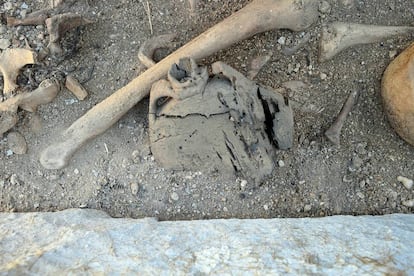
Spanish archeologists excavating a Visigoth necropolis in Sena, in the northeastern province of Huesca, have uncovered what they say is a burial site dating to the 10th century BCE and that was part of the Late Bronze Age Urnfield culture.
The name comes from the custom of cremating the dead and placing their ashes in urns
Two urns and a lid were discovered in the graveyard. Hugo Chautón, the archeologist overseeing the excavation, says Urnfield culture spread from central Europe into northeastern Spain around 1,000 years BCE. The name comes from the Urnfield culture’s custom of cremating the dead and placing their ashes in urns, which were then buried.
“This culture represents the transition from the Bronze Age to the Iron,” said Chautón, “and provides valuable information about burial practices, particularly the move from burying the dead to cremating them.”
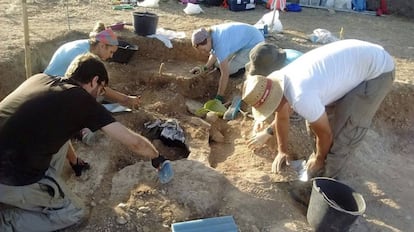
The team has been excavating a Visigoth burial site dating back to the fifth century of the Common Era. The Visigoths invaded the Iberian peninsula in the wake of the collapse of the Roman empire.
“We had indications that there was some kind of previous settlement nearby and this year we have established that it was just underneath the Visigoth necropolis,” said Chautón.
English version by Nick Lyne.
Tu suscripción se está usando en otro dispositivo
¿Quieres añadir otro usuario a tu suscripción?
Si continúas leyendo en este dispositivo, no se podrá leer en el otro.
FlechaTu suscripción se está usando en otro dispositivo y solo puedes acceder a EL PAÍS desde un dispositivo a la vez.
Si quieres compartir tu cuenta, cambia tu suscripción a la modalidad Premium, así podrás añadir otro usuario. Cada uno accederá con su propia cuenta de email, lo que os permitirá personalizar vuestra experiencia en EL PAÍS.
¿Tienes una suscripción de empresa? Accede aquí para contratar más cuentas.
En el caso de no saber quién está usando tu cuenta, te recomendamos cambiar tu contraseña aquí.
Si decides continuar compartiendo tu cuenta, este mensaje se mostrará en tu dispositivo y en el de la otra persona que está usando tu cuenta de forma indefinida, afectando a tu experiencia de lectura. Puedes consultar aquí los términos y condiciones de la suscripción digital.