Decontaminating Palomares 1966 nuclear accident site will cost €640m
Spain and US need to reach a deal over how to share the clean-up bill

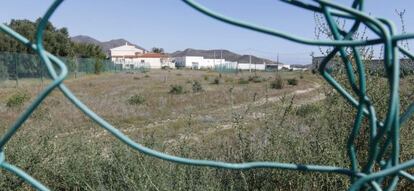
US Secretary of State John Kerry and his Spanish counterpart José Manuel García-Margallo on Monday signed a deal declaring their intentions to clear up contaminated soil in Palomares (Almería), the site of a 1966 air crash that left four nuclear bombs in the area.
But the agreement is just the first stage of a long process to move almost 50,000 cubic meters of contaminated soil to the United States. The project will cost around €640 million and require an international treaty that needs to be ratified by a Spanish parliament that is heading towards a general election on December 20.
Authorities plan to construct a special highway to move the contaminated earth by truck from Almería to Cartagena port
According to sources familiar with the negotiations between representatives of both governments in recent months, the bulk of the money – around €500 million – will go towards the storage of the contaminated soil in the United States, while treating the remains, compacting them down, packing them up and transporting them will cost another €140 million.
The complexity of the operation is illustrated by the fact that authorities plan to construct a special highway to move the 40,000 to 50,000m3 of contaminated earth by truck from Almería to the port of Cartagena, a distance of around 100 kilometers, and ship it to the US. They will also have to take out civil liability insurance to cover possible accidents along the way.
The two parties admit that the operation will be financed jointly, though it is yet to be determined how much each country will assume. The logical approach, according to sources consulted on the matter, would be for the US to pay for the storage, as it is exclusively responsible for the contamination, with both governments sharing the cost of preparing and shipping the soil.
Fulfilling the agreement could take between 12 and 24 months, depending on the complexity of the preparation work and how the soil is shipped
Although the declaration signed on Monday does not specify the destination of the contaminated soil, a January report by the US Department of Energy pointed to the Nevada National Security Site, situated in the desert 100 kilometers northwest of Las Vegas, as its possible future home.
Fulfilling the agreement could take between 12 and 24 months, depending on the complexity of the preparation work and whether transporting the earth to a US Pacific port is done in one or several shipments.
Before that, though, as set out in Monday’s deal, the two nations need to seal a “binding agreement,” for which negotiations will begin immediately. Margallo said that the content of the document was already at a “very advanced stage,” but did want to reveal any details.
Knowledgeable sources indicated that, according to Spanish legislation, this agreement will have the status of an international treaty and will have to be ratified by Congress as it heads towards a general election on December 20, which could delay its coming into force.
Kerry and Margallo underlined that Monday’s deal reflected the excellent bilateral relations between both nations. The US State Secretary added that his country would “assume its responsibility,” while Margallo noted that this was about “repairing the mistake that was made 50 years ago” and that it was being done now so that, as soon as possible, “Palomares can return to the normality it had before 1966.”
On January 17, 1966, the US Air Force accidentally dropped four nuclear bombs over this spot in Almería, when two of its aircraft, a B-52 bomber and a KC-130 refueling plane, collided in midair. Although the bombs did not go off, two of them released part of their charge, and 50,000m3 of land remain contaminated with plutonium.
English version by Nick Funnell.
Tu suscripción se está usando en otro dispositivo
¿Quieres añadir otro usuario a tu suscripción?
Si continúas leyendo en este dispositivo, no se podrá leer en el otro.
FlechaTu suscripción se está usando en otro dispositivo y solo puedes acceder a EL PAÍS desde un dispositivo a la vez.
Si quieres compartir tu cuenta, cambia tu suscripción a la modalidad Premium, así podrás añadir otro usuario. Cada uno accederá con su propia cuenta de email, lo que os permitirá personalizar vuestra experiencia en EL PAÍS.
¿Tienes una suscripción de empresa? Accede aquí para contratar más cuentas.
En el caso de no saber quién está usando tu cuenta, te recomendamos cambiar tu contraseña aquí.
Si decides continuar compartiendo tu cuenta, este mensaje se mostrará en tu dispositivo y en el de la otra persona que está usando tu cuenta de forma indefinida, afectando a tu experiencia de lectura. Puedes consultar aquí los términos y condiciones de la suscripción digital.
More information

Spain and US sign deal over 1966 nuclear incident in Palomares
Últimas noticias
‘The weird house’: How Frank Gehry revolutionized a neighborhood with his own home
Trump Billionaires Club, the video game that recreates the president’s lifestyle and tries to revive his memecoin
Trump launches the million-dollar ‘Gold Card’ visa
The largest study to date on antidepressants is conclusive: They must be discontinued slowly and with therapy
Most viewed
- Belle da Costa, the woman who concealed her origins in 1905 and ended up running New York’s most legendary library
- Liset Menéndez de la Prida, neuroscientist: ‘It’s not normal to constantly seek pleasure; it’s important to be bored, to be calm’
- Trump’s new restrictions leave no migrant safe: ‘Being a legal resident in the US is being a second-class citizen’
- A mountaineer, accused of manslaughter for the death of his partner during a climb: He silenced his phone and refused a helicopter rescue
- The fall of a prolific science journal exposes the billion-dollar profits of scientific publishing