Mexican marines open fire on US couple in border town
Shooting from a helicopter, security forces confused visitors’ vehicle with that of drug cartel boss
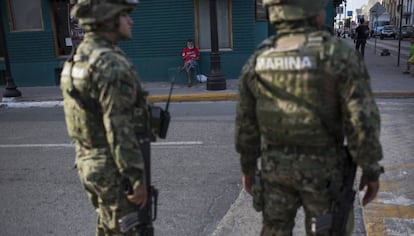
Two US citizens were injured when Mexican marines reportedly opened fire on their vehicle in Reynosa on Tuesday after they had visited relatives in the border town, which sits across from MacAllen, in Texas.
Alfredo Alemán, aged 39, and his wife Alejandra were injured after a marine helicopter reportedly opened fire on their car. Both were hit by glass when their windshield and other windows shattered. Both were transferred to MacAllen. An investigation has been launched by the Mexican Attorney General’s office.
There have been a number of incidents in recent days in the area, in the northern Mexican state of Tamaulipas: on Tuesday, up to four suspected criminals were shot by security forces. Leading Mexican daily Excélsior, citing security forces, reported that the marines had received information that Comandante Toro, a leading figure in the Gulf Cartel, based in Matamoros, the second-largest city in Tamaulipas, was traveling in a late model grey Ford Tahoe.
In an official statement, the Mexican navy denies having opened fire on the vehicle, saying that security forces were engaged in clashes in different areas of Reynosa, but not in the area where the couple were injured.
The Mexican navy denies having opened fire on the vehicle
The incident was reported on social networks by local people who had warned of shootouts in different areas of the city, as well as reporting road blocks to help cartel members escape, as reported in local daily Hoy de Tamaulipas.
Tamaulipas has been hit by violence since 2010, when the Gulf and Zetas cartels fell out. Authorities say the Gulf cartel retained control of Reynosa, Matamoros, Ciudad Victoria and the port of Altamira in the south of the state, where it received shipments of drugs from Central and South America.
Meanwhile, the Zetas control the central part of the coast. It also held onto Nuevo Laredo, across the border from Texas, used as a shipping point for drugs into the United States. The arrival of army and marine forces has unleashed further conflict, with both sides trying to gain new territory, in the process carrying out kidnappings, roadblocks and murders.
Tamaulipas is one of the most violent states in Mexico. In 2016, more than 600 people left the area to escape violence, according to a report by the Mexican Commission for the Defense and Promotion of Human Rights (CMDPDH).
Eduardo Alemán, brother of the injured man, spoke to local daily Milenio, saying: “They had just done some shopping, there was no warning given, he was with his wife and they opened fire just because the vehicle was the same. Nobody has given me any explanation so far.”
English version by Nick Lyne.
Tu suscripción se está usando en otro dispositivo
¿Quieres añadir otro usuario a tu suscripción?
Si continúas leyendo en este dispositivo, no se podrá leer en el otro.
FlechaTu suscripción se está usando en otro dispositivo y solo puedes acceder a EL PAÍS desde un dispositivo a la vez.
Si quieres compartir tu cuenta, cambia tu suscripción a la modalidad Premium, así podrás añadir otro usuario. Cada uno accederá con su propia cuenta de email, lo que os permitirá personalizar vuestra experiencia en EL PAÍS.
¿Tienes una suscripción de empresa? Accede aquí para contratar más cuentas.
En el caso de no saber quién está usando tu cuenta, te recomendamos cambiar tu contraseña aquí.
Si decides continuar compartiendo tu cuenta, este mensaje se mostrará en tu dispositivo y en el de la otra persona que está usando tu cuenta de forma indefinida, afectando a tu experiencia de lectura. Puedes consultar aquí los términos y condiciones de la suscripción digital.