Spanish woman who held longest White House vigil dies in shelter
Conchita Martín lived in a tent near the US presidential residence for 35 years
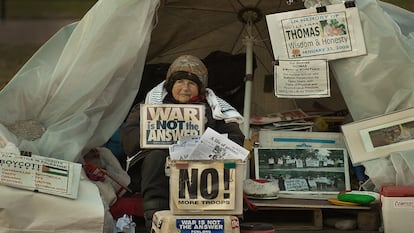
Concepción “Conchita” Martín Picciotto, the Spanish-born woman who camped outside the White House for 35 years, in what may have been one of the longest protest vigils in US history, died on Monday in a homeless shelter in Washington DC.
She was believed to be in her 80s, but her exact age was not known.
Conchita would only move her camp at brief times during the presidential inaugurations
Also known as Connie, Conchita began making headlines after she set up her tent on August 1, 1981 near the White House, placing placards and other signs against nuclear proliferation. She became popular with the tourists who came to visit 1600 Pennsylvania Avenue.
She would only move her camp for brief periods during presidential inaugurations.
After she divorced her Italian husband, a Manhattan court ruling saw her lose custody of her daughter. It was this court ruling that pushed her to begin her long protest vigil, which the Washington Post considers to have been the longest in US history.
“I wanted to go to Spain to raise my young daughter, but my husband and his family were against this and began a harassment campaign that ended in me losing custody of the girl,” she told EL PAÍS in a 1991 interview, which marked the 10th anniversary of her White House vigil.
Her inability to convince the court to change its mind led her to protest other causes. Conchita joined Thomas Doubting, an activist in his campaign against nuclear proliferation.
Conchita defended the cause until her final days.
When a man jumped the White House fence in 2014 and entered the building through the main entrance, the Department of Homeland Security was considering dismantling Conchita’s campsite, but eventually decided against it.
The Spanish woman lived off donations and sales of the “peace rocks” she painted herself.
She died at the N Street Village, a shelter for homeless women.
English version by Martin Delfín.
Tu suscripción se está usando en otro dispositivo
¿Quieres añadir otro usuario a tu suscripción?
Si continúas leyendo en este dispositivo, no se podrá leer en el otro.
FlechaTu suscripción se está usando en otro dispositivo y solo puedes acceder a EL PAÍS desde un dispositivo a la vez.
Si quieres compartir tu cuenta, cambia tu suscripción a la modalidad Premium, así podrás añadir otro usuario. Cada uno accederá con su propia cuenta de email, lo que os permitirá personalizar vuestra experiencia en EL PAÍS.
¿Tienes una suscripción de empresa? Accede aquí para contratar más cuentas.
En el caso de no saber quién está usando tu cuenta, te recomendamos cambiar tu contraseña aquí.
Si decides continuar compartiendo tu cuenta, este mensaje se mostrará en tu dispositivo y en el de la otra persona que está usando tu cuenta de forma indefinida, afectando a tu experiencia de lectura. Puedes consultar aquí los términos y condiciones de la suscripción digital.