Spanish site yields oldest human DNA
Analysis of fossil from Atapuerca uncovers link to Siberian hominids
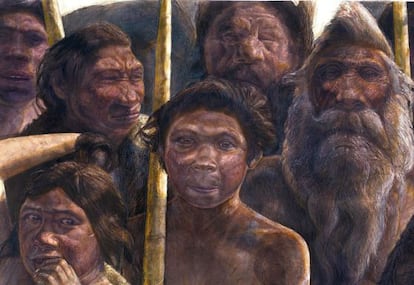
An international team of scientists has managed to extract DNA from a 400,000-year-old hominid fossil found at the Atapuerca site in Burgos in northern Spain — the oldest such sequence yet published.
And what’s more, it has delivered up a major surprise. After comparing it with the genome of other relatives of Homo sapiens, the team found the DNA to be closer not to that of Neanderthals, as was expected because of their shared characteristics, but to that of a more obscure population so far only known to have lived in Siberia just 40,000 years ago, the Denisovans.
“There are only advances in knowledge when you find the unexpected,” said Juan Luis Arsuaga, co-director of the Atapuerca site and head of the excavations at the Sima de los Huesos (the bone pit) site where the fossil was found during the 1990s. “Everything points to much greater complexity in the Middle Pleistocene than what was thought. We hope future investigations will clear up the relation between the Sima fossils, the Neanderthals and the Denisovans.”
The team, made up of Atapuerca paleontologists and German ancient DNA experts, sequenced the mitochondrial DNA of the fossil, which comes from the structures that power cells and is only inherited along the maternal line. Until now DNA this old had only been obtained from animals, specifically a 700,000-year-old horse found in Canada.
Tu suscripción se está usando en otro dispositivo
¿Quieres añadir otro usuario a tu suscripción?
Si continúas leyendo en este dispositivo, no se podrá leer en el otro.
FlechaTu suscripción se está usando en otro dispositivo y solo puedes acceder a EL PAÍS desde un dispositivo a la vez.
Si quieres compartir tu cuenta, cambia tu suscripción a la modalidad Premium, así podrás añadir otro usuario. Cada uno accederá con su propia cuenta de email, lo que os permitirá personalizar vuestra experiencia en EL PAÍS.
¿Tienes una suscripción de empresa? Accede aquí para contratar más cuentas.
En el caso de no saber quién está usando tu cuenta, te recomendamos cambiar tu contraseña aquí.
Si decides continuar compartiendo tu cuenta, este mensaje se mostrará en tu dispositivo y en el de la otra persona que está usando tu cuenta de forma indefinida, afectando a tu experiencia de lectura. Puedes consultar aquí los términos y condiciones de la suscripción digital.